Food Assistance › Guide
Free School Meals: NSLP, Breakfast, and CEP Rules
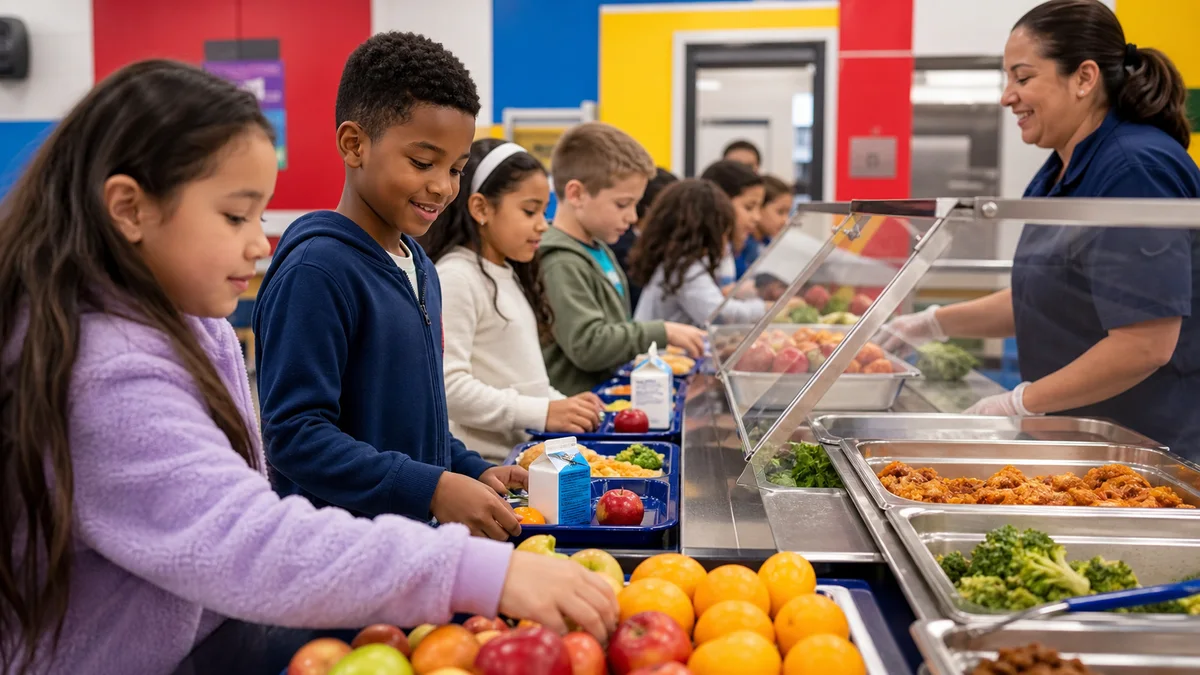
Free school breakfast and lunch may be offered to every child at a school, or only to children who meet program rules. Ask the school office or meal staff which system your school uses.
A child in a household that gets SNAP qualifies for free meals at a school in the federal meal program. The school still needs to confirm that status. Other families can send a free school meal form.
What are the school lunch and breakfast programs?
The National School Lunch Program helps schools serve low-cost or free lunches. The School Breakfast Program does the same for breakfast. Ask which programs your school offers.
Schools in these programs must serve meals that meet federal food rules. The meal may look different by age and local menu.
A child can use the meal program even if the family gets food help at home. School meals do not count as household income for SNAP or WIC.
When does every student eat free?
Some schools use the Community Eligibility Provision, called CEP. A CEP school serves breakfast and lunch at no cost to every student. Families do not fill out the usual meal form.
CEP uses the share of students approved without a household meal form, such as through SNAP records. A school, group of schools, or district may qualify. Taking part is a school choice. It does not mean each family has low income.
Other schools may have a state or local plan that gives free meals to all. Ask the school if it needs a separate family income form for school funds or SUN Bucks.
Who may get free or reduced-price meals?
At a school that uses meal forms, USDA sets yearly income limits. Free meals use a limit based on 130% of the federal poverty guidelines. Reduced-price meals use a limit based on 185%. A family above the free-meal limit may still meet the reduced-price limit.
The 2026–27 income limits apply from July 1, 2026, through June 30, 2027. They vary by household size, with higher limits in Alaska and Hawaii. Use your school's current form and chart.
Children in a household with SNAP qualify for free meals. TANF and some other aid programs can also qualify a child. Schools may match program records without a form from you. If no notice arrives, ask the school what it needs. Do not assume that a missing match means your child does not qualify.
How do you apply?
- Ask the school or district for its current meal form.
- List household members as the form tells you.
- Report income and how often it is paid. For wages, use pay before taxes and other deductions, not take-home pay.
- Include other income the form asks for, not just wages. Follow its rules for self-employment income and amounts that do not count.
- Add a SNAP, TANF, or FDPIR case number if that is your path.
- Sign and return the free form to the school or district.
You can apply at the start of school or later if income falls, work ends, or family size changes. You do not have to pay a person to file it.
USDA's online sample is not a real application for your family. Get the right form from your school. If you received an approval notice for this school year, ask whether any form is still needed.
What if the family has no fixed address?
Children who meet the rules for homelessness, runaway status, or migrant education can get free meals without the usual income form. Children in foster care under a court or agency also qualify.
Ask the school's homeless liaison or meal staff to help confirm your child's status. You do not need to wait until you have a permanent home to ask. Ask when free meals will start and what help is available today.
Can school meal status help with SUN Bucks?
It can, in states, Tribes, and territories that take part. A child at a school in the federal meal programs may be enrolled based on an individual free or reduced-price meal record. Some children qualify through SNAP or other aid records.
At a CEP school, every student eats free. That alone does not show that each child meets SUN Bucks rules. Some families must apply. Check the official SUN Bucks steps for your area and summer year.
Read our SUN Bucks guide for more. A school meal form is not always a SUN Bucks application. Ask about both before the local deadline.
What if the school says no?
Read the notice and check the household list, pay period, and income facts. Ask the school how to appeal if something is wrong. Keep a copy of your form and the notice.
If food is short now, use our emergency food guide. A school counselor may also know about weekend food bags and summer meal sites.
Your next step. The free SNAP screening guide explains what your SNAP office needs to check and how to find the official application route. It does not calculate a SNAP award. All tools →
Sources
- USDA — Families and School Meal Eligibility
- USDA — 2026–2027 income guidelines, effective July 1, 2026–June 30, 2027
- USDA — Community Eligibility Provision
- USDA — School Breakfast Program
- USDA — school meal applications and direct eligibility, updated April 2, 2026
- USDA — CEP final rule, effective October 26, 2023
- USDA — Summer EBT household rules, updated July 22, 2026
- National Center for Homeless Education — access to food, August 2022
- 7 CFR 245.6 — direct certification, foster and homeless eligibility, and appeals
- USDA — CEP questions and answers, February 6, 2024, question 59 on Summer EBT